Filtering by Category: knowledge base

Karako -- Little Children On Japanese Pottery

Added on by the ikebana shop.

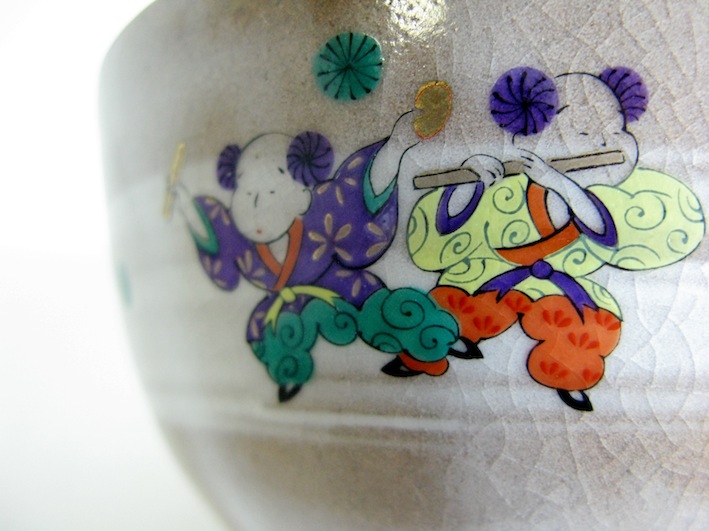
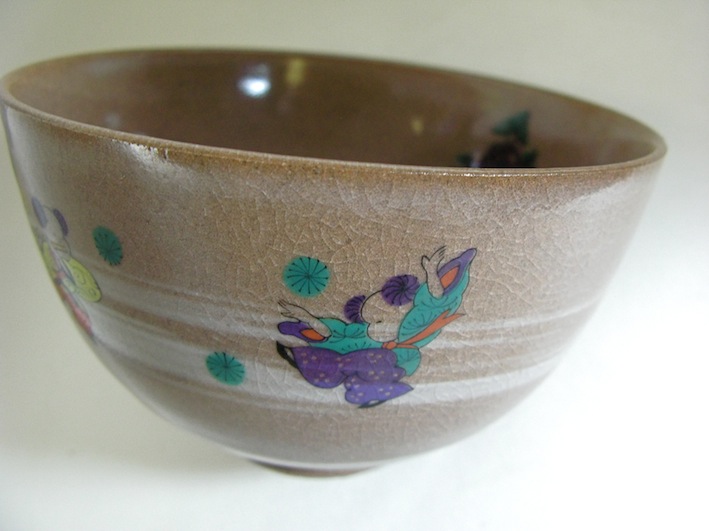
Many of us have probably seen them at one time or another...  drawings of cute little children, dressed in Chinese style, on bowls or dishes.  

IMG_3302.JPG

The children are normally depicted as playing under a pine tree, with butterflies and peonies around.

IMG_3303.JPG

These children are called "karako" (唐子), which literally translate to "Chinese children".   "Kara" (唐) is actually the character for the Tang dynasty (618-907) of China, considered by many as the golden age of Chinese culture and power.  The little children design on pottery symbolizes health for sons & daughters and longevity/continuity.

The number of children on the design also have significance.  You will probably see three, five or seven children.  (Always odd, never even number!)  The more children on the pottery, the higher is its grade.

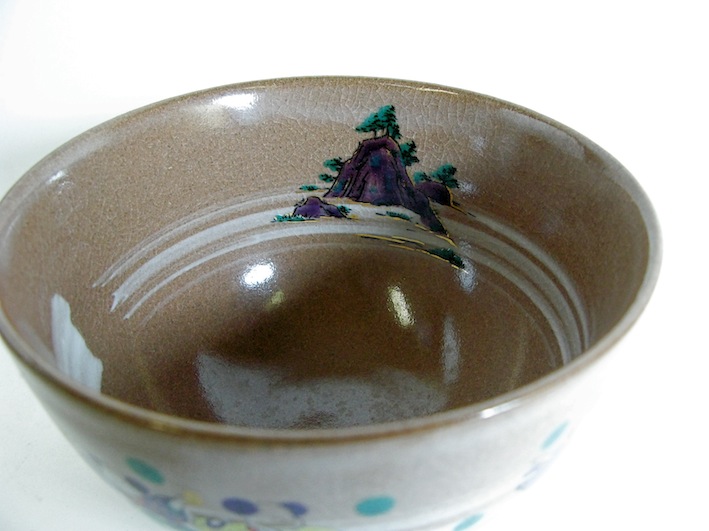
This matcha tea bowl has 5 children...and the pine tree is found on the inside of the bowl!
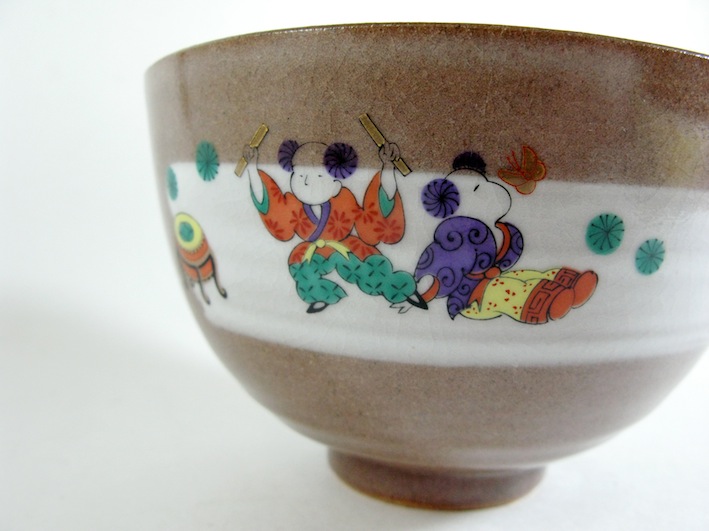
All pottery pictured in this article are available for sale at the shop or by mail order.

(All photos by the ikebana shop.  All rights reserved.)

Fat Quarters ... So That's What They're Called!

Added on by the ikebana shop.

Seeing our selection of Japanese fabric, a customer, who turned out to be an avid quilter, exclaimed, "Oh, fat quarters!"  

IMG_3260.JPG

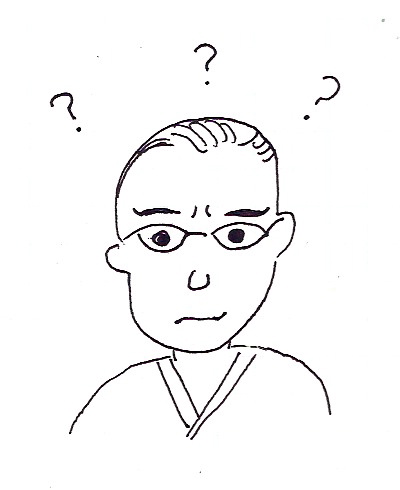
...which raised about 3 question marks on the top of my head.  Fat quarters???

questions.jpeg

I asked and she kindly explained.  "In the quilting world, these are called fat quarters," she declared, pointing at the fabric "end-cuts".  For lack of a better term, we had coined the word "end-cut", which had simply been a direct translation of the Japanese hagire (端切れ), to refer to these strips of fabric.  (We had previously introduced them in this blog post.)

fat quarter.jpeg

A standard roll of fabric is 44" wide.  Fabric is normally purchased by the yard (36").  So a yard gives you a piece of cloth that's 44" x 36" big.  If you want a regular quarter, then you'll get a cut that's 44" wide and only 9" long.  Now, a "fat quarter" is when you cut the width in half and a yard-length in half as well...which gives you 22" x 18"...which is still a quarter of the basic yard, only "fatter".  Apparently, quilters prefer fat quarters because they are able to cut bigger chunks of fabric for their purposes.

Now, our Japanese fat quarters are a little chubbier, measuring around 22" x 20" ...which makes sense because 20" is about 50cm.  And because Japan uses the metric system, these cuts are probably quarter meter (as opposed to yard)!

Later on....  Feeling like a child with a new toy, I put this fresh knowledge to the test.  Another customer came to buy a Japanese quilting book.  Said it was a present for his mother who loves quilting.  So I mentioned casually, "Oh, we have fat quarters too."  He knew exactly what I was talking about and said he would bring his mom to the shop next time!  Joy!  I almost felt like an "Insider"...but reality is I am still just a "name-dropper"!  (^_^)

Many patterns available at the shop.  


(All photos and illustrations by the ikebana shop.  All rights reserved.)
 

How To Appreciate Ikebana

Added on by the ikebana shop.

Here is a little slide presentation that we prepared for Nocturne 2011.  We are in Zone 4, #68 in the guidebook. (http://www.nocturnehalifax.ca/)  

We hope it will make the experience of seeing our ikebana exhibit more interesting.  Please visit the shop on Oct.15th (Sat), 6PM - 12 midnight.  See you!

Also, Miyako will be performing live ikebana demonstrations at Pier 21 - Canadian Museum of Immigration.  

http://www.pier21.ca/home

 Tentative demonstration schedule: 7:30, 8:30, 9:30.

This slide presentation was prepared for our exhibit at the Nocturne 2011, Art At Night event, Oct 15, 2011, 6PM-12 midnight, Halifax NS. Acknowledgements: * All Japan scenery photos were downloaded from Tomo.Yun (www.yunphoto.net/en/), a free stock photo website. * The basic upright arrangement (depicting "heaven, earth and man) is the work of Heather Schellinck.